
Introduction to Indoor CO₂ Levels
Ever walked into a room and felt stuffy or sleepy for no clear reason? That’s often your body reacting to elevated CO₂ levels. Understanding safe CO2 levels ppm, indoor CO2 standards, and acceptable CO2 levels is no longer just a technical concern—it’s a daily necessity.
In today’s world, where we spend nearly 90% of our time indoors, air quality plays a silent yet powerful role in our health, productivity, and overall well-being.
Why CO₂ Levels Matter Indoors
Carbon dioxide (CO₂) is a natural gas we exhale every moment. But when it builds up indoors, it becomes a signal of poor ventilation.
The Science Behind CO₂ Accumulation
Think of a closed room like a sealed bottle. The more people inside, the faster CO₂ levels rise. Without fresh air entering, this gas accumulates, reducing oxygen quality.
How Humans Contribute to CO₂ Levels
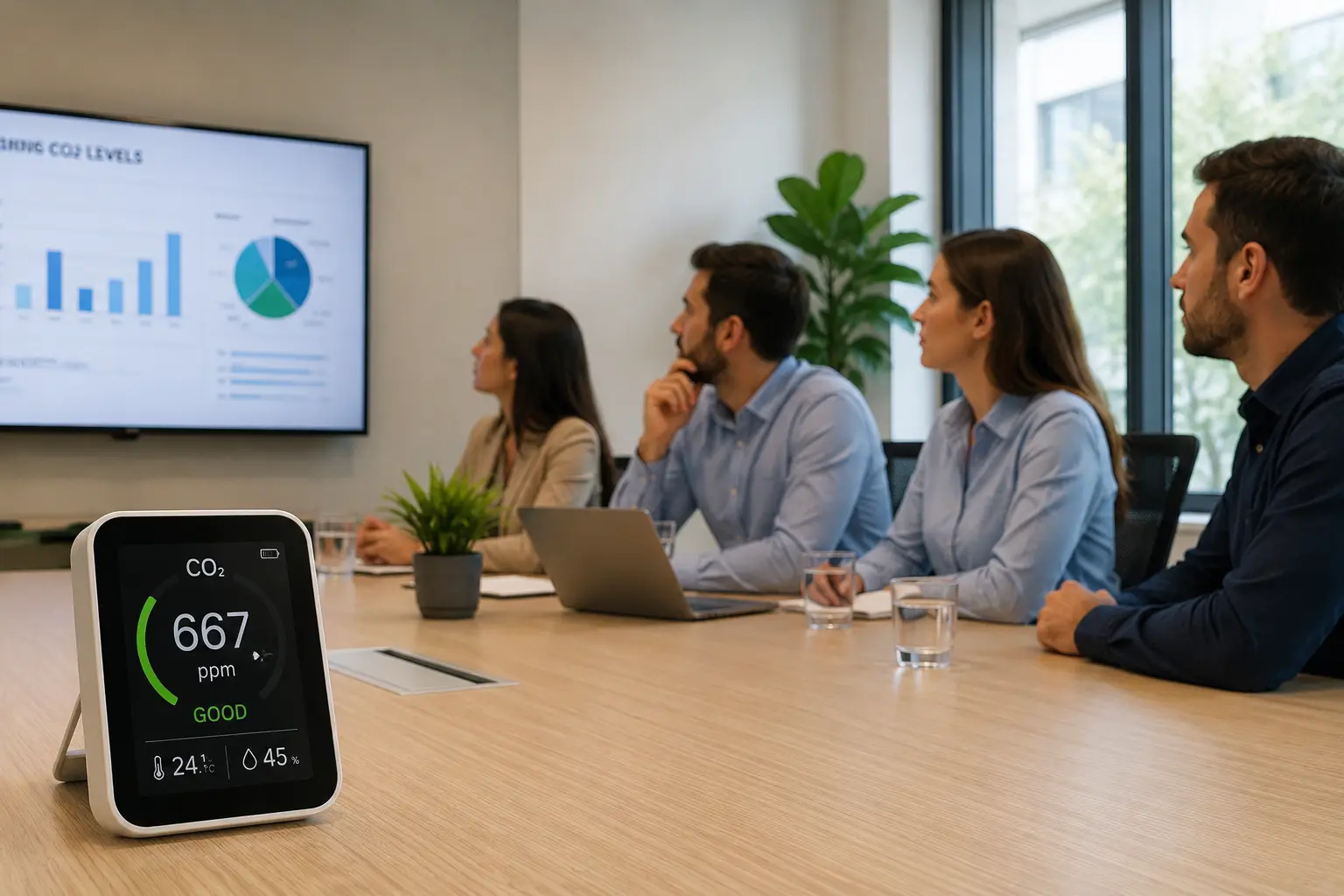
Each breath you take adds CO₂ to the room. Now imagine 10 people in a meeting room for hours—that’s a lot of accumulated carbon dioxide.
What Are Safe CO2 Levels ppm?
Let’s get straight to the point.
Ideal Indoor CO₂ Range
- 400–600 ppm: Excellent (fresh outdoor air level)
- 600–800 ppm: Good
- 800–1000 ppm: Acceptable CO2 levels
- 1000–1500 ppm: Poor air quality
- Above 1500 ppm: Unhealthy
Acceptable CO2 Levels in Different Environments
- Homes: Below 1000 ppm
- Offices: 600–800 ppm ideal
- Classrooms: Below 1000 ppm recommended
If your indoor CO₂ levels consistently cross 1000 ppm, it’s time to act.
Indoor CO₂ Standards Across the World
Guidelines by Health Organizations
Various global organizations recommend maintaining indoor CO₂ below 1000 ppm for comfort and cognitive performance.
Workplace vs Residential Standards
Workspaces often demand stricter air quality due to productivity concerns, while homes may tolerate slightly higher levels—but should ideally remain within safe limits.
Effects of High CO₂ Levels
Short-Term Health Effects
- Headaches
- Fatigue
- Drowsiness
- Reduced concentration
Ever felt sleepy in a meeting? High CO₂ could be the hidden culprit.
Long-Term Exposure Risks
Prolonged exposure can impact decision-making, productivity, and even overall respiratory health.
How to Measure Indoor CO₂ Levels
CO₂ Monitoring Devices
Modern CO₂ monitors provide real-time data. They’re like fitness trackers—but for your air.
Where to Place Sensors
- Living rooms
- Bedrooms
- Conference rooms
Avoid placing them near windows or vents for accurate readings.
Common Causes of High Indoor CO₂
Poor Ventilation
Closed windows and lack of airflow trap CO₂ indoors.
Occupancy Density
More people = more CO₂. Simple math, big impact.
How to Reduce CO₂ Levels Indoors
Improve Ventilation
Open windows, use exhaust fans, or install ventilation systems. Fresh air is the simplest solution.
Use Air Purification Systems
While purifiers don’t remove CO₂ directly, advanced systems combined with ventilation can help manage air quality effectively.
Smart Building Solutions
Automated HVAC systems adjust airflow based on CO₂ levels—like a thermostat, but smarter.
CO₂ Levels in Homes vs Workspaces
Residential Settings
Bedrooms often have higher CO₂ due to overnight occupancy. Ever wake up groggy? That’s why.
Office & Commercial Spaces
Meeting rooms are hotspots. High occupancy + closed environment = rapid CO₂ buildup.
Smart Technology & CO₂ Monitoring
IoT-Based Monitoring Systems
Smart sensors connected to dashboards allow real-time tracking, alerts, and automation. Businesses are increasingly adopting these solutions for better air quality management.
Tips to Maintain Acceptable CO₂ Levels
- Open windows regularly
- Avoid overcrowding spaces
- Use CO₂ monitors
- Maintain HVAC systems
- Schedule ventilation breaks in offices
Think of it like hydration—your space needs fresh air just like your body needs water.
Future of Indoor Air Quality Management
Indoor air quality is becoming the next big utility—just like electricity and water. With rising awareness, smart monitoring systems and regulations will soon become standard across homes and workplaces worldwide.
Conclusion
Understanding and maintaining safe CO2 levels ppm, following indoor CO2 standards, and ensuring acceptable CO2 levels is no longer optional—it’s essential.
Whether you’re at home or at work, clean air directly impacts your health, focus, and energy. The good news? Managing CO₂ levels isn’t complicated. With simple steps like improving ventilation and using smart monitoring tools, you can create a healthier indoor environment.
So next time you feel that afternoon slump, don’t just blame your workload—check your air quality.
FAQs
1. What are safe CO2 levels indoors?
Ans – Safe levels are typically between 400–800 ppm, with up to 1000 ppm considered acceptable.
2. What happens if CO2 levels are too high?
Ans – You may experience headaches, fatigue, and reduced concentration.
3. How can I measure indoor CO2 levels?
Ans – Using a CO₂ monitor or indoor air quality sensor.
4. Are CO2 levels higher at night?
Ans – Yes, especially in closed bedrooms with limited ventilation.
5. Do air purifiers reduce CO2?
Ans – Not directly. Ventilation is required to lower CO₂ levels.
6. What is the maximum acceptable CO2 level indoors?
Ans – Generally, 1000 ppm is considered the upper safe limit.
7. How often should I ventilate my room?
Ans – At least every 2–3 hours or continuously if possible.
8. Why are offices more affected by CO2 buildup?
Ans – Due to higher occupancy and limited airflow in enclosed spaces.