
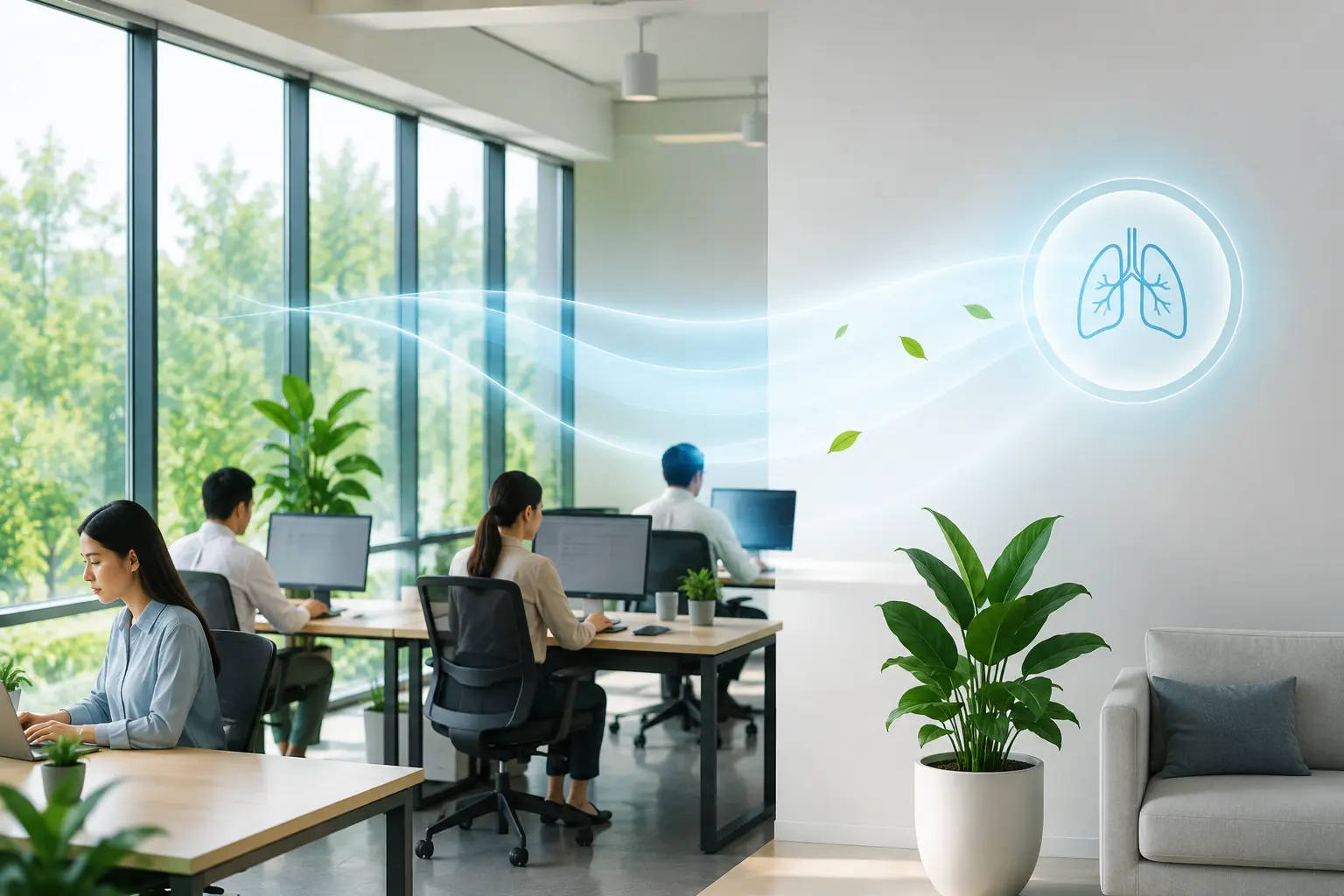
Introduction to Workplace Air Quality
Let’s be honest—when was the last time you walked into your office and thought about the air you were breathing?
Most people don’t. Yet, office air quality importance is becoming a major concern worldwide. From glass-covered corporate towers to co-working spaces, indoor air is often more polluted than the air outside. Surprising, right?
As businesses evolve, so should their priorities. And one thing that’s quickly rising on the radar is workplace AQI awareness—because clean air isn’t a luxury anymore; it’s a necessity.
What is Office Air Quality and Why It Matters
Understanding Indoor Air Pollution
Indoor air pollution refers to contaminants present within enclosed spaces. These include dust, chemical fumes, mold spores, and even bacteria.
Think of your office like a sealed jar. If the air inside isn’t refreshed or cleaned, it just keeps getting worse.
Difference Between Indoor and Outdoor Air Quality
While outdoor pollution gets more attention, indoor air can be 2–5 times worse. Why? Limited ventilation and continuous exposure to pollutants.
The Hidden Dangers Lurking in Office Air
Common Pollutants in Workspaces
Offices are filled with unseen threats:
Dust, VOCs, and Microbial Contaminants
- Dust from carpets and furniture
- VOCs from paints, printers, and cleaning products
- Mold and bacteria from damp areas
It’s like an invisible cocktail of toxins floating around you all day.
Impact of Poor Air Quality on Employee Health
Short-Term Health Effects
Ever felt sleepy, dizzy, or irritated at work? Poor air might be the reason.
Common symptoms include:
- Headaches
- Eye irritation
- Fatigue
Long-Term Health Risks
Prolonged exposure can lead to:
- Respiratory diseases
- Heart issues
- Reduced immunity
Not exactly what you want from your workplace, right?
Productivity and Performance: The Silent Killer
Cognitive Decline Due to Poor Air
Bad air doesn’t just affect your body—it affects your brain.
Studies show that employees working in clean air environments perform significantly better in decision-making and problem-solving.
Increased Absenteeism
More sick days = less productivity.
It’s a domino effect businesses can’t afford to ignore.
The Business Case for Workplace AQI Awareness
Financial Losses Due to Poor Air Quality
Poor air leads to:
- Lower productivity
- Higher healthcare costs
- Increased employee turnover
That’s money literally vanishing into thin air.
Employee Retention and Satisfaction
A healthy workplace keeps employees happy—and loyal.
Clean air = better morale.
Why Companies Are Still Ignoring Air Quality
Lack of Awareness
Many organizations still underestimate office air quality importance.
Budget Misconceptions
Some think improving air quality is expensive. But in reality, the cost of ignoring it is far greater.
Measuring Air Quality in Workspaces
Understanding AQI Metrics
AQI (Air Quality Index) measures pollution levels and helps identify risks.
Tools and Technologies for Monitoring
Modern tools can track:
- CO2 levels
- PM2.5 particles
- Humidity
Real-time data means real-time action.
Steps to Improve Office Air Quality
Ventilation Improvements
Fresh air circulation is key.
Open windows, upgrade HVAC systems, and ensure proper airflow.
Use of Air Purifiers
Air purifiers help remove harmful particles efficiently.
Indoor Plants and Natural Solutions
Plants like snake plant and peace lily can improve air quality naturally.
Think of them as nature’s air filters.
Role of Technology in Clean Air Workspaces
IoT-Based Air Monitoring Systems
Smart sensors and dashboards provide live air quality data.
This is where workplaces are getting smarter—using tech to create healthier environments.
Global Trends in Workplace Air Quality
Shift Toward Health-Centric Workspaces
Companies worldwide are redesigning offices with health in mind.
Clean air is now part of workplace design—not an afterthought.
Creating a Culture of Workplace AQI Awareness
Employee Education
Awareness drives change.
Educating employees about air quality encourages better habits.
Policy Implementation
Organizations should implement:
- Air quality standards
- Regular monitoring
- Maintenance protocols
Future of Workplace Air Quality
Smart Offices and Sustainable Air Solutions
The future is clear—literally.
Smart offices will:
- Automatically adjust air quality
- Use sustainable filtration systems
- Prioritize employee well-being
Conclusion
Air is invisible, but its impact is undeniable.
Ignoring office air quality importance is no longer an option. Businesses that prioritize workplace AQI awareness will not only protect their employees but also boost productivity, reduce costs, and build stronger brands.
Think of clean air as the foundation of a successful workplace. Without it, everything else struggles.
FAQs
1. Why is office air quality important?
Ans- It directly affects employee health, productivity, and overall workplace efficiency.
2. What are common indoor air pollutants in offices?
Ans- Dust, VOCs, mold, and bacteria are the most common pollutants.
3. How does poor air quality affect productivity?
Ans- It reduces focus, increases fatigue, and leads to more sick days.
4. What is AQI and why does it matter?
Ans- AQI measures air quality levels and helps identify potential health risks.
5. How can offices improve air quality?
Ans- Through better ventilation, air purifiers, and regular monitoring.
6. Are indoor plants effective for air purification?
Ans- Yes, they help improve air quality but should be combined with other solutions.
7. What role does technology play in air quality management?
Ans- IoT systems provide real-time monitoring and automated solutions.
8. Is improving air quality expensive?
Ans- Not necessarily. It’s an investment that saves costs in the long run.